uPVC vs Brick Porches: Which Is Best for Your UK Home?

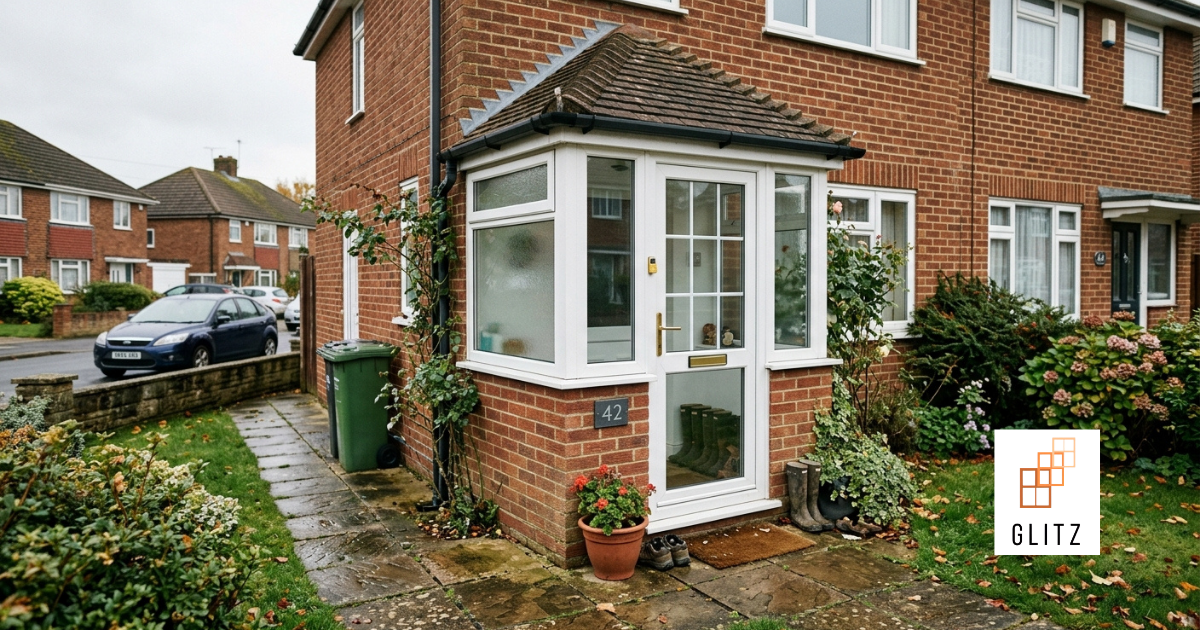
If you were to ask any homeowner what they would add to their entrance or make any changes, “adding a porch” would be among the most common answers. A porch might be a tiny addition, but it comes with some big advantages, such as less draught in the hallway, places to store muddy boots, and a better look of the house. The hardest decision, however, is to come up with which material to use for the porch installation.
Most homeowners are confused when deciding between a uPVC and a brick porch. Both options are proven to be very reliable as they have been used for thousands of houses built across the country. In fact, no answer to the question of uPVC vs. brick porch will be a wrong one since it mostly depends on needs of a particular homeowner and on his/her budget.
A uPVC porch is built from strong, weatherproof uPVC framing combined with double glazing and a purpose-built roof. It’s the option most homeowners reach for when they want something practical that won’t drag on for weeks to install, and won’t need looking after once it’s up.
A brick porch is exactly what it sounds like — a proper masonry extension, usually built to match the brickwork already on your house. Done well, it doesn’t read as an addition at all; it looks like it’s always been there.
Feature | uPVC Porch | Brick Porch |
Average Cost | Lower, more budget-friendly | Higher, premium build |
Installation Time | 2–5 days | 2–3 weeks |
Maintenance | Minimal — just a wipe-down | Very low, occasional repointing |
Lifespan | 25–35 years | 50+ years |
Insulation | Good, thanks to double glazing | Excellent, thanks to solid cavity walls |
Kerb Appeal | Clean, modern finish | Classic, traditional finish |
Best Suited To | New-builds and modern homes | Period, traditional and brick-built homes |
Resale Value Impact | Positive | Strongly positive |
There isn’t a single “best” answer here, only what’s best for your particular house and situation:
That hybrid option has become genuinely popular recently, precisely because it doesn’t ask you to compromise. You get the strength of masonry at ground level and the thermal performance of uPVC above it.
In most cases, yes. It’s one of those upgrades that pays for itself in more ways than one:
We’re not in the business of pushing one material over another just because it’s easier to fit. Whether you’re set on uPVC, brick, or something in between, our job is to build the porch that actually suits your home — not the one that’s most convenient for us.
From the first design conversation through to the final fitting, we handle the whole process — the result should be a porch that adds real warmth, value and kerb appeal, not just square footage.
Ready to Upgrade Your Entrance?
Whether you’re drawn to the classic look of brick, the practicality of uPVC, or a hybrid design that gives you both, Glitz Windows can help you get there.
Get in touch with Glitz Windows today for a free, no-obligation quote and find out which porch style genuinely suits your home.
Slightly, generally speaking. Solid brick with cavity walls holds heat a touch better than glazing, though modern double glazing has closed that gap considerably.
uPVC comes out cheaper in most cases, thanks to lower material and labour costs. Brick costs more upfront but is the longer-term, more permanent investment.
Yes, and plenty of homeowners do. A hybrid design with a brick dwarf wall and a uPVC glazed top gives you durability and style without picking one over the other.
Usually not, as most porches fall under permitted development rights provided they meet certain size and height limits. It’s still worth double-checking with your local council or asking your installer to confirm before work starts.
At GLITZ Window & Door, we specialise in delivering high-quality window and door services backed by decades of hands-on experience.
WhatsApp us